
Udaan, India's largest business-to-business (B2B) e-commerce company, has received approval from the National Company Law Tribunal (NCLT) for its internal corporate restructuring plan, according to sources. By consolidating into a single entity, the restructuring will enhance Udaan's agility and pave the way for various financing options, including the ability to pursue an initial public offering (IPO) in India by 2026, according to people familiar with the matter.

The management of Tata Communications presented its product-to-platform strategy and explained how it hopes to grow its new products and portfolios, and geographies. The management targets doubling of data revenue by FY27 to ~28,000 crore (implied 18 per cent annual revenue growth). The DPS (Digital Platform & Services) segment is likely to contribute over 60 per cent of data revenue.

Hero MotoCorp (HMCL) saw strong volume performance in the first quarter of the current financial year (Q1FY25), but margins disappointed due to weak spare part sales and negative electric vehicle (EV) margins. The company hopes for a strong festive season due to better rural sentiment. Revenue grew 16 per cent year-on-year (Y-o-Y) to Rs 10,140 crore, operating profit was up 21 per cent to Rs 1,460 crore, and adjusted net profit grew 19 per cent Y-o-Y to Rs 1,120 crore.

Several executives argue that UPI has the potential to grow tenfold, but warn that the absence of a monetisation model risks stagnating the real-time payments system, which has been recording all-time-high transaction volumes every year.
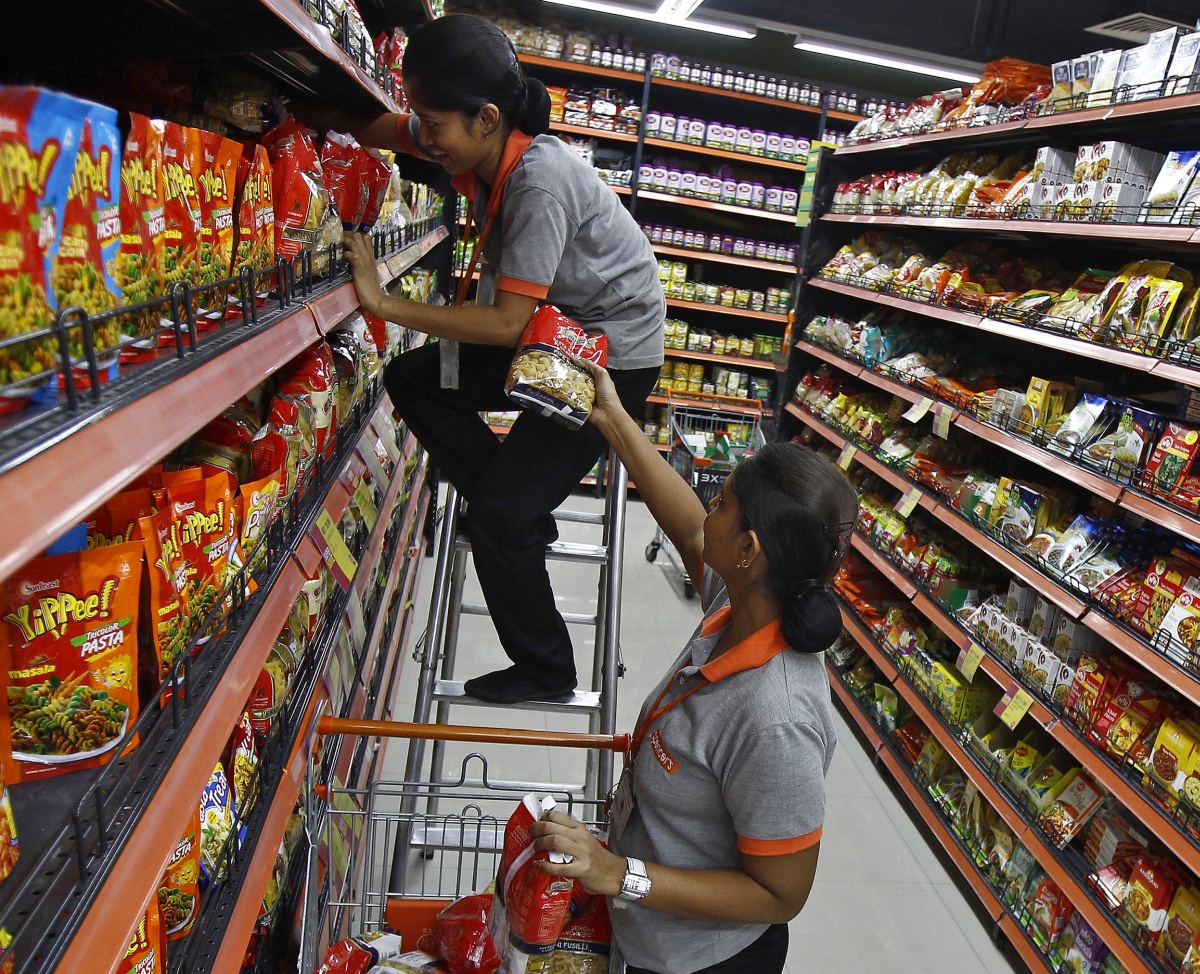
However, rural demand continued to remain a concern for FMCG companies during the quarter.

Siemens on Tuesday reported over 37 per cent decline in its net profit to Rs 408 crore in March quarter, compared to the same period year ago, mainly due to under-absorption of fixed costs and higher material costs in the Digital Industries business. The company follows an October to September fiscal year.

Hero MotoCorp, a major player in the two-wheeler market, has seen a 9 per cent rise in its stock since the beginning of the month. This increase, driven by the largest motorcycle company by volume, is attributed to expectations of a revival in rural sales due to normal monsoons, government measures to boost consumption, recent market share gains, and a large valuation discount compared to peers. In the near term, the company's volume performance and growth trajectory, particularly in rural markets and entry-level segments, are expected to be key drivers.

Food delivery aggregator Swiggy saw its loss widen for the fourth quarter (January-March) of financial year 2024-25 (Q4FY25). The firm reported a consolidated loss of Rs 1,081.1 crore for the quarter, compared to a loss of Rs 554.7 crore in the corresponding quarter of FY24.

The first-quarter performance of top IT services players, as well as mid-cap firms, has been subdued, reflecting macro uncertainties. The numbers of the top four firms show several misses, hinting at difficult times ahead. One mismatch is the total contract value (TCV) signed by the firms and the revenue growth registered.

the largest transactions of the year include the merger of Quality Care India and Aster DM Healthcare valued at $5.08 billion, followed by Bharti Enterprises' acquisition of a 24.5 per cent stake in the BT Group at $4.08 billion, and a family settlement transaction in the Godrej family at $3.5 billion.

The Ambani family, headed by billionaire Mukesh Ambani, possesses a wealth of Rs 28 lakh crore, more than double that of the Adani family at Rs 14.01 lakh crore, a report said on Tuesday. The 300 most valuable Indian families have a wealth of over $1.6 trillion (over Rs 140 lakh crore), or more than 40 per cent of the country's GDP.

IPOs have been the flavour of the season for some time. But the coming together of three mega IPOs, from diverse businesses and historic relevance, could tell a story that's still in the making, points out Nivedita Mookerji.

The deal fell through over unresolved disagreements over contentious issues, mainly on agriculture and automotive sector tariffs.

The stock of United Spirits, the country's largest liquor company by market capitalisation (mcap), has gained 11 per cent over the past week on double-digit growth guidance, rising premiumisation trend, operationally in-line performance in the March (Q4FY24) quarter and a rally in consumer stocks. The revenue growth of the company came in at 7 per cent year-on-year (Y-o-Y) mirroring the growth of the prestige and above (P&A) segment. This segment comprising premium brands accounts for 88 per cent of the revenues.

The last four years, the best for corporate profits in a long time, have not been as impressive for corporate capital expenditure. The combined net profits of India's top listed companies excluding banks, financial services, and insurance (BFSI) increased at a compound annual growth rate (CAGR) of 32.4 per cent since FY20, a sharp jump from the 7.4 per cent in corporate earnings between FY14 and FY19.

In the Indian stock market, investors are interested in the actions of both domestic and foreign institutional investors (FIIs and DIIs). These groups have wealth as well as expertise in research, which makes them powerful participants in the Indian stock market. Their buy and sell positions have a large effect on stock prices and market sentiment due to the large volume.

Dabur's performance in the July-September quarter of the current financial year (Q2FY25) was weak but in line with consensus. Consolidated revenue declined 5 per cent year-on-year (Y-o-Y) due to a temporary adjustment in General Trade (GT) inventory. Indian revenue declined 7.6 per cent, while international business grew 13 per cent Y-o-Y in constant currency (CC) terms.

In the April-June quarter (Q1) of 2023-24 (FY24), growth in sales of FSN E-Commerce Ventures (the parent company of Nykaa) decelerated to 24 per cent year-on-year (Y-o-Y), and 9 per cent quarter-on-quarter (Q-o-Q), compared with 34 per cent in the previous quarter, due to a decline in the beauty & personal care (BPC) and fashion division's gross merchandise value (GMV). But Nykaa claimed it gained market share in both divisions. The earnings before interest, taxes, depreciation, and amortisation (Ebitda) margin of 5.2 per cent expanded 120 basis points (bps) from a year earlier.

'The overall market cycle is very positive.'

'New announcements are made every day which brings tremendous amount of instability and uncertainty.' 'Relying on America has become a big problem.'

The textile and apparel sector is India's second-largest employment provider, after agriculture, and it is now caught in a wave of uncertainty following the Donald Trump administration's tariff policy.

Tata Steel's consolidated net profit more than doubled to Rs 2,007.36 crore during the June quarter, on account of "increase in net steel realisations and the planned cost-takeouts" across geographies. The Tata Group entity had posted a net profit of Rs 918.57 crore in the year-ago period.

Raising toast to 25 successful years, India's largest wine maker Sula Vineyard is eyeing a sustained double-digit growth in revenue over the next five years, buoyed by growth in the premium and elite categories and expansion of its new ranges. It was during Covid that the vineyards shifted focus to its own brands and pivoted towards growing the premium and elite segment of the market.

Tata Motors (TaMo) is aiming to gain market share across its passenger vehicle (PV) and commercial vehicle (CV) businesses - targeting a 40 per cent share in CVs and a 16 per cent share in PVs by 2027. Meanwhile, it has already achieved earnings before interest, tax, depreciation, and amortisation (Ebitda) breakeven in its electric vehicle (EV) business at 1.2 per cent (up 830 basis points), ahead of its target of 2025-26 (FY26).

The greenback rose 9 percent against currencies.

Apollo Hospitals Enterprise is set to expand presence in metro cities during FY26 with the addition of five hospitals that would add over 1,400 beds.

Growth in corporate profits needs to be commensurate with wages to boost the economy, Economic Survey 2024-25 said, noting that sharp disparities between the two pose risk to the economy by curbing demand. The document tabled in Parliament on Friday noted that while the labour share of GVA (gross value added) shows a slight uptick, the disproportionate rise in corporate profitsredominantly among large firmsaises concerns about income inequality.

Gross GST revenue rose 12.3 per cent to Rs 1.96 lakh crore in January on higher domestic economic activity, government data showed on Saturday. This includes 10.4 per cent growth in revenue from sale of goods and services domestically at Rs 1.47 lakh crore and 19.8 per cent rise in tax revenue from imported goods at Rs 48,382 crore.

Revenue and profit contractions to continue till investment cycle does not revive.

'Market momentum and investor interest are at unprecedented levels, making this the opportune moment.'

Developers based outside Mumbai are making a beeline for India's largest real estate market through redevelopment projects. These include Delhi-based DLF, Bengaluru-based Prestige Estates and Puravankara, Pune-based Kolte-Patil Developers and Vascon Engineers, and Hyderabad-based Ramky Estates.

A robust margin performance in the September quarter (Q2FY25) led to a 12 per cent rise in the stock of defence major Bharat Electronics (BEL). While the stock has given up most of those gains in the recent market correction, analysts are positive on the company due to its strong order book, new order inflows, and margin trajectory. The near-term trigger has been the operating performance in Q2FY25.

India's biggest telecom players, Bharti Airtel and Reliance Industries-backed Jio Platforms, will soon bring billionaire Elon Musk-led SpaceX's Starlink satellite services to India. According to analysts, the move could boost India's tele density, especially in the rural areas, and may be an opportunity for investors to add the two stocks on dips for long-term gains
Hero MotoCorp on Tuesday posted 24 per cent increase in consolidated profit after tax at Rs 1,169 crore for the fourth quarter ended March 31, 2025 riding on higher margins backed by better product mix, parts revenue and cost effectiveness. The company had reported a consolidated profit after tax (PAT) of Rs 943 crore in January-March FY24.

'The retail industry is still growing in double digits.'

Bharti Airtel on Monday reported a 168 per cent year-on-year rise in consolidated net profit to Rs 3,593 crore for the September quarter, and the company unveiled top-level changes, including Gopal Vittal moving into the role of executive vice chairman on January 1, 2026. India's second-largest telco - that competes with Reliance Jio and Vodafone Idea in the Indian telecom market - clocked quarterly revenues of Rs 41,473 crore, 12 per cent higher than the year-ago period, aided by strong momentum in India and growth in Africa.

Mahindra & Mahindra Ltd on Monday reported a 13.34 per cent rise in consolidated profit after tax at Rs 3,541.85 crore in the fourth quarter ended March 31, 2025 led by good performance from auto and farm equipment sectors. The company had posted a consolidated net profit of Rs 3,124.94 crore in the same quarter of the previous fiscal, Mahindra & Mahindra (M&M) said in a regulatory filing.

The economy is likely to log in a tepid 6 per cent growth next fiscal, in line with the consensus estimates, rating agency Crisil said on Thursday. The agency also sees the economy averaging a growth rate of 6.8 per cent over the next five fiscals. Crisil further said it expects the corporate revenue to log in double-digit rise again next fiscal.
The revenue growth rate for Tata Consultancy Services and Infosys Technologies has declined by over 20 percentage points to about 25 per cent from over 45 per cent in the quarter ended June 2006.

Deloitte on Thursday projected economic growth at 6.5-6.7 per cent for the current fiscal, as tax incentives provided in the Budget are expected to push domestic demand amid an uncertain global trade environment. Deloitte estimated India's GDP growth at 6.3-6.5 per cent for FY25 and said that the economic outlook for FY26 hinges on a delicate balance between evolving trade relations and government efforts to boost domestic consumer demand.
